
main points
1
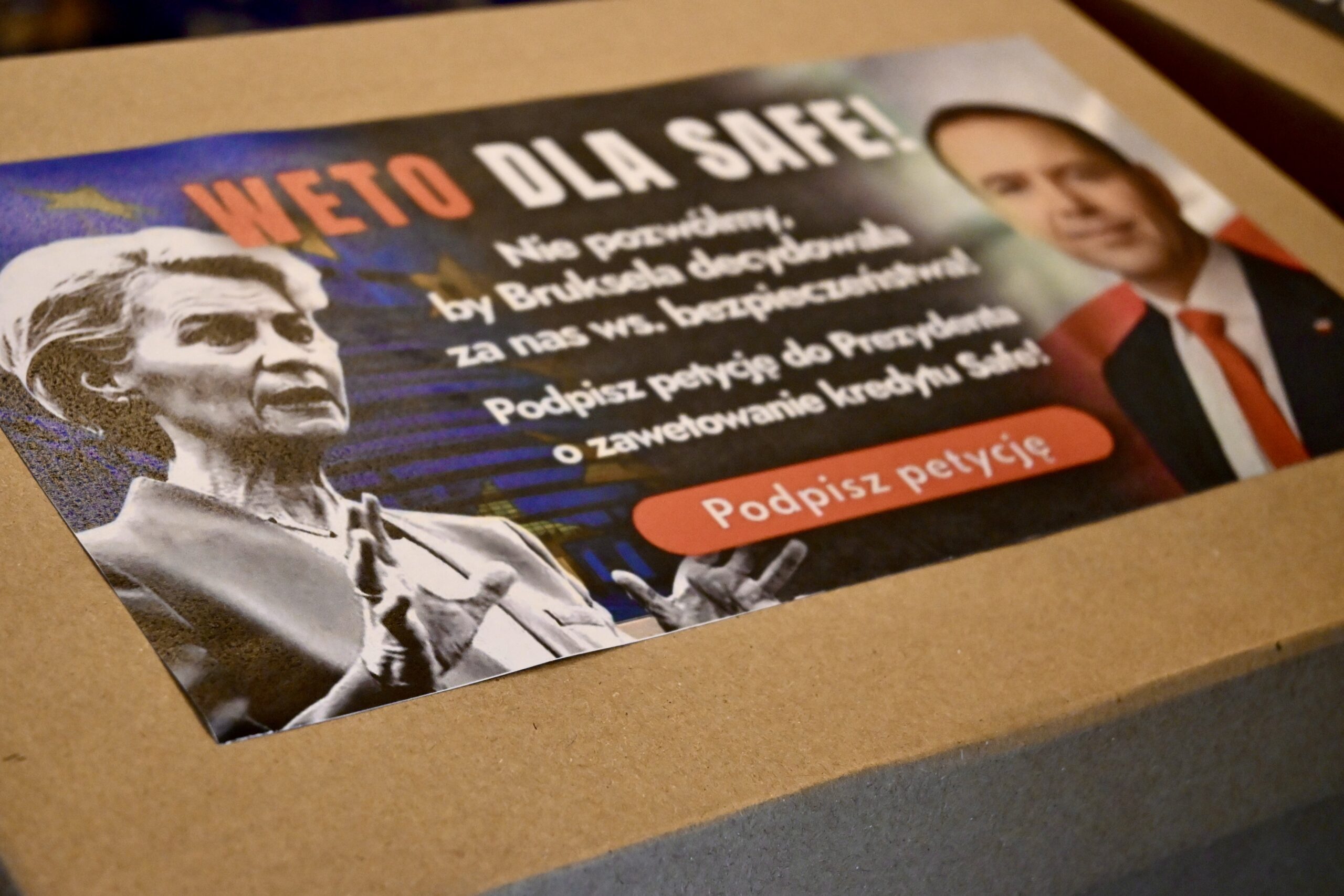
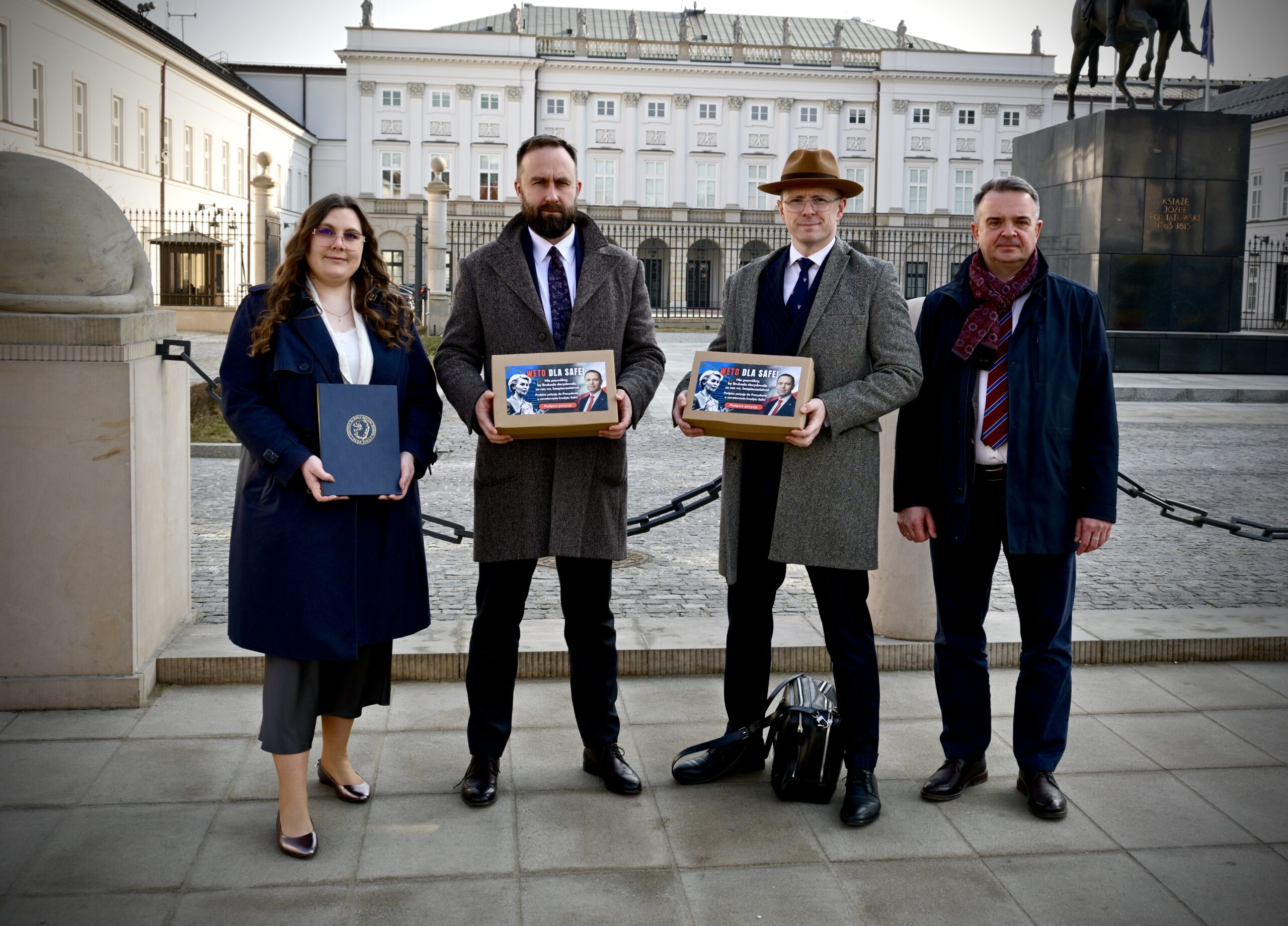
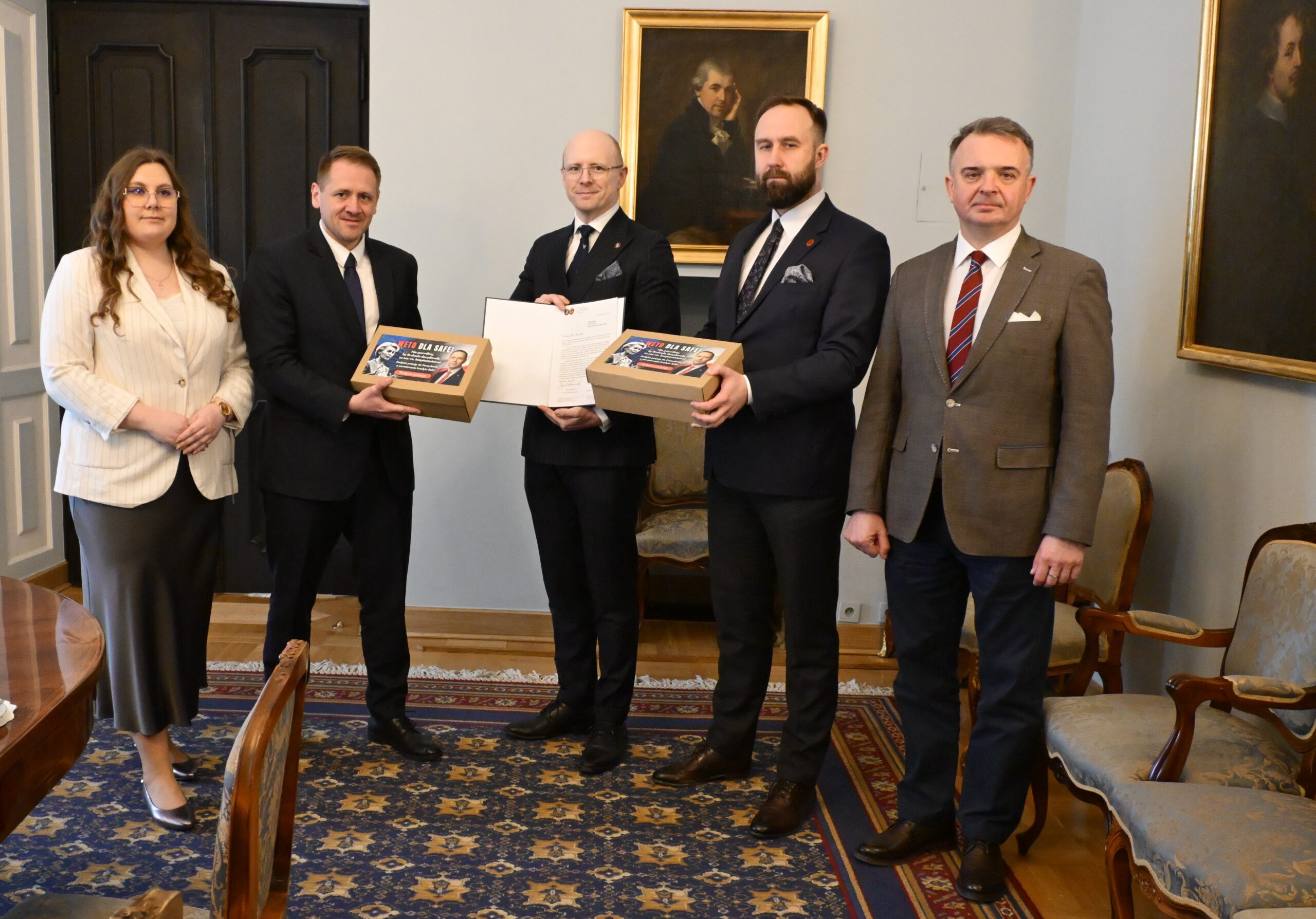
Some 12 hours before the President of the Republic of Poland announced that he would not sign the Polish Act on the Financial Instrument for Strengthening Security (SAFE) into law, the Ordo Iuris Institute submitted nearly 40,000 signatures to him on a petition calling for a veto.
2
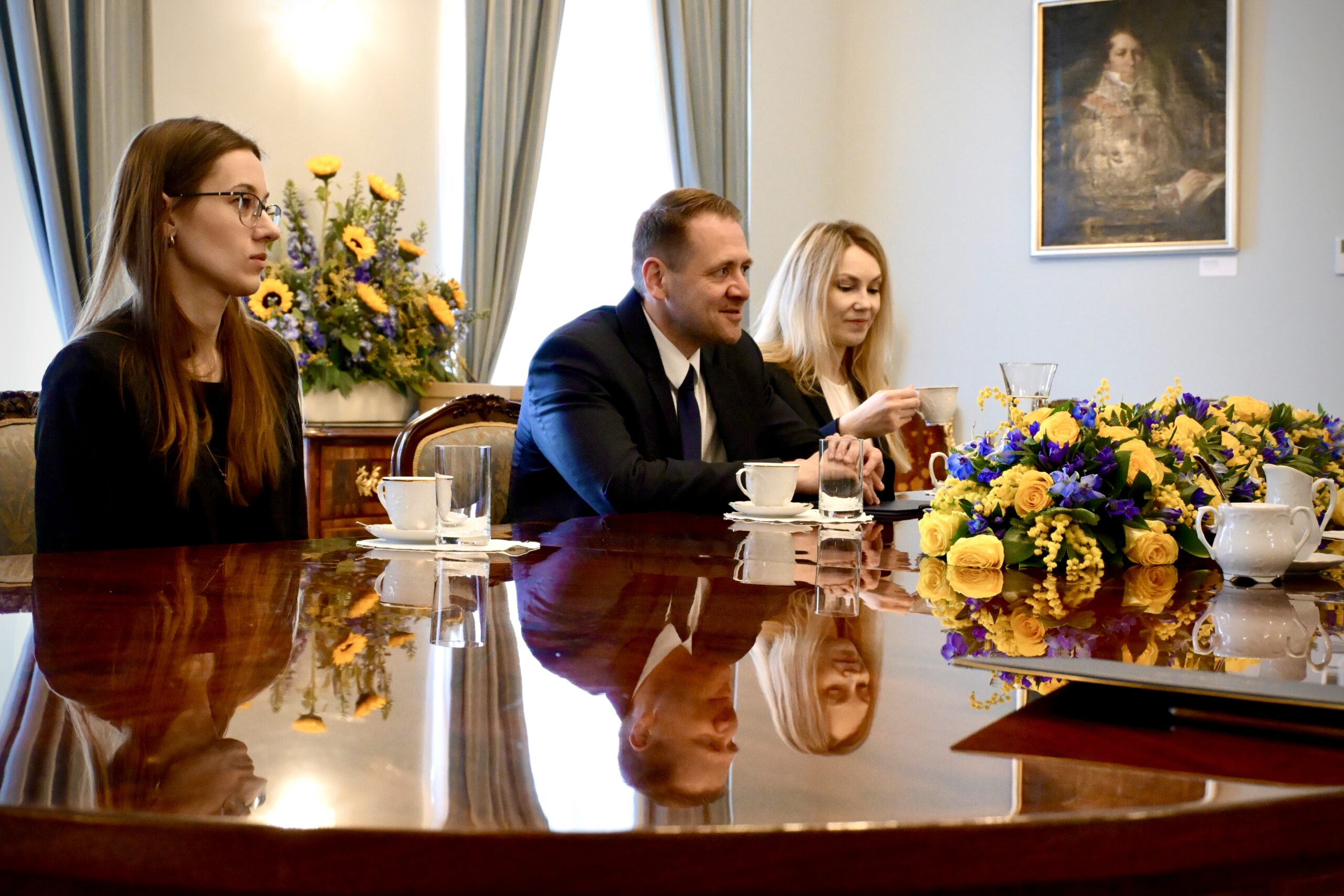
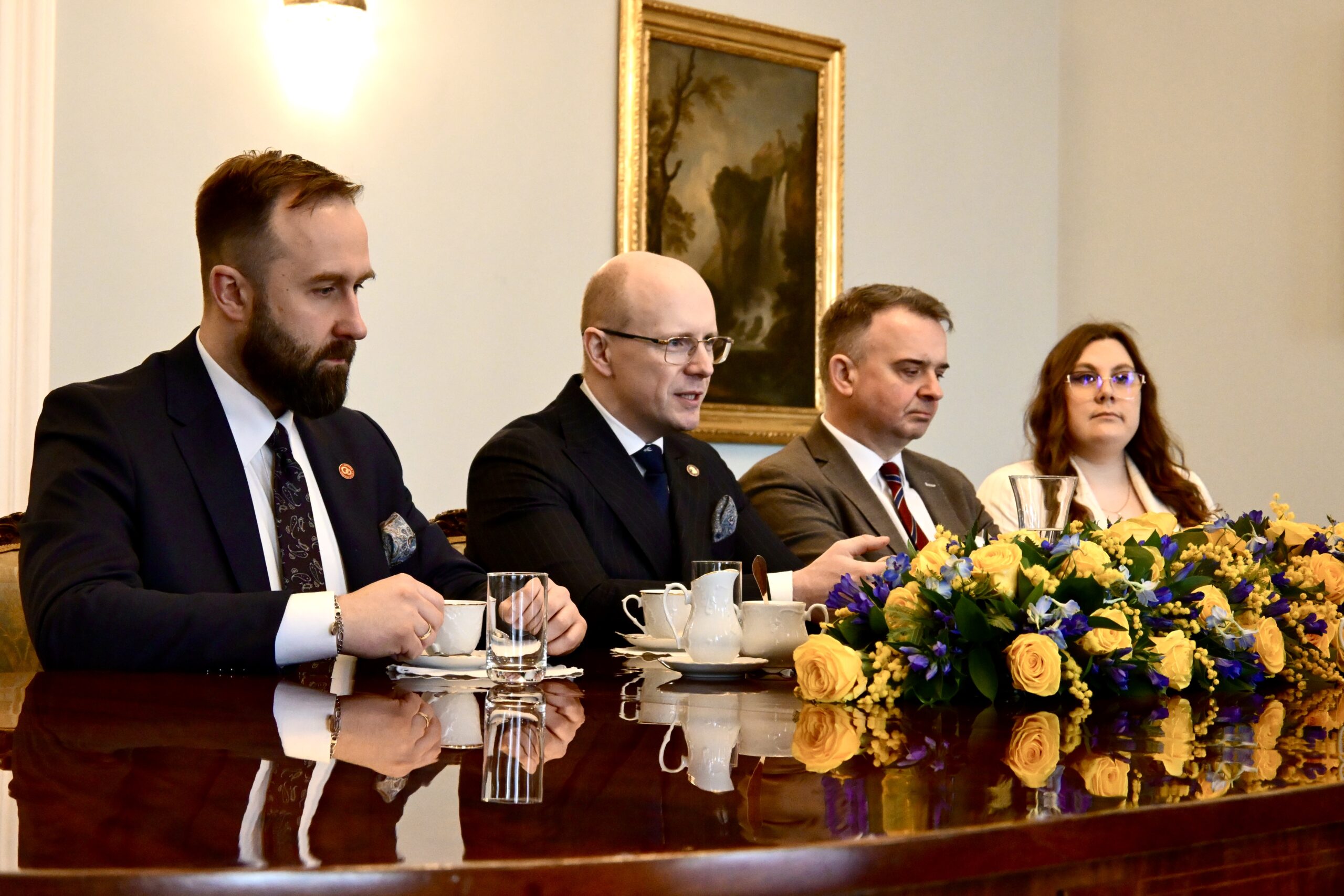
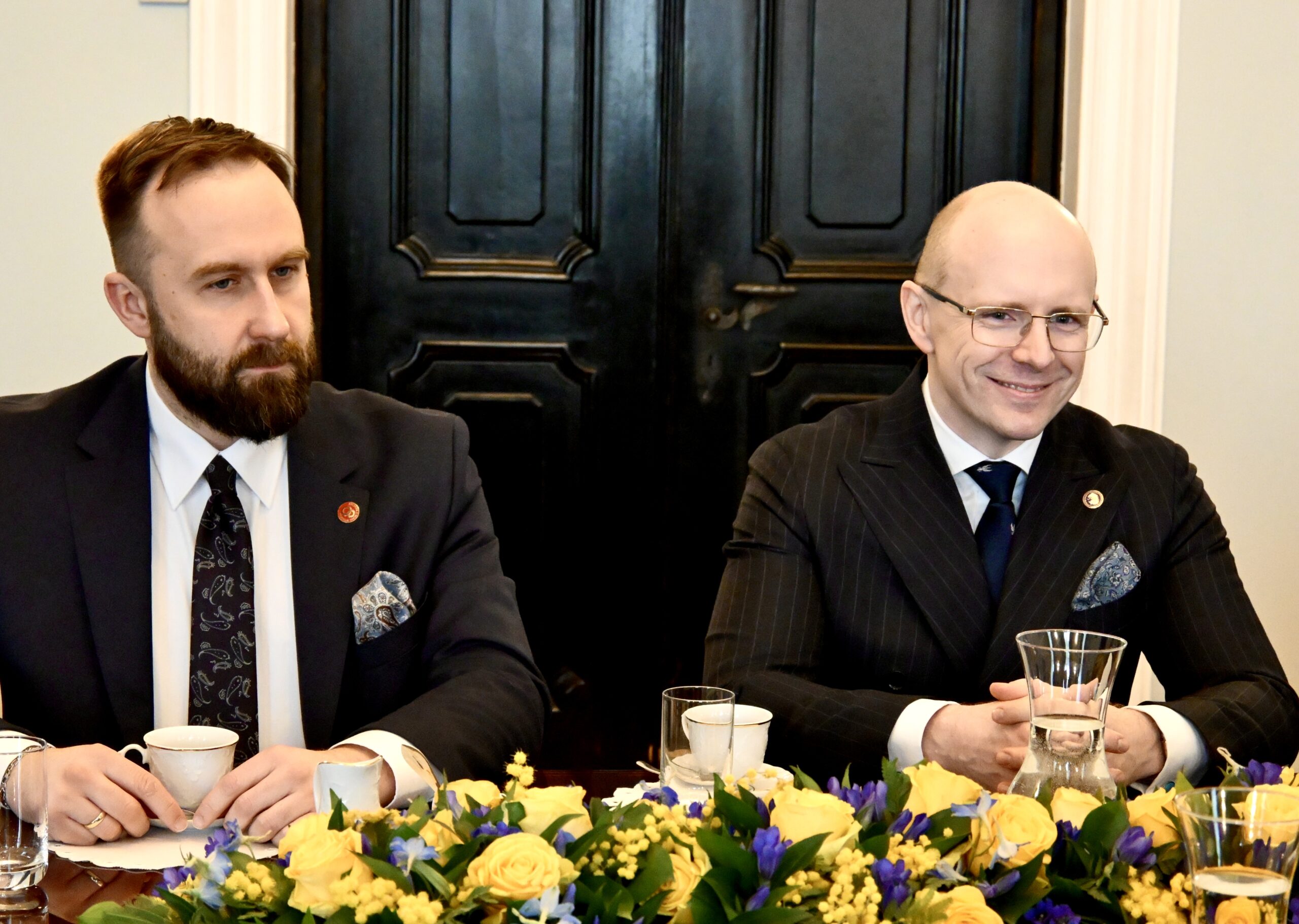
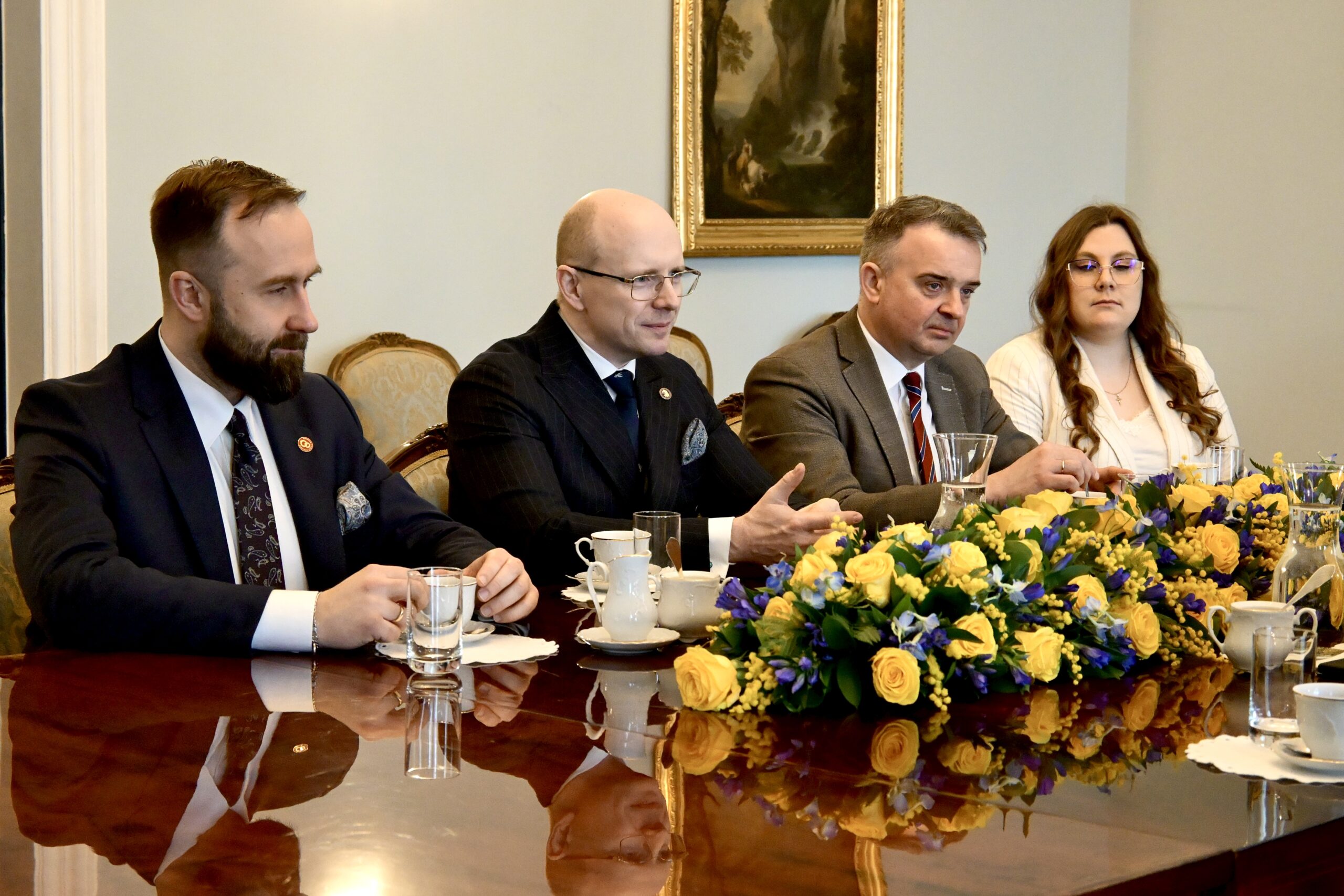
Jerzy Kwaśniewski and Marcin Perłowski, respectively president and vice president of the Ordo Iuris Institute, participated in the meeting held at the Presidential Palace. Karol Nawrocki was represented by Mateusz Kotecki, Undersecretary of State at the Chancellery of the President.
3
Representatives of the Institute conveyed their concerns to the Undersecretary regarding the risks posed by the SAFE program. Previously, analyses on this topic prepared by Ordo Iuris experts were submitted to the Chancellery of the President.

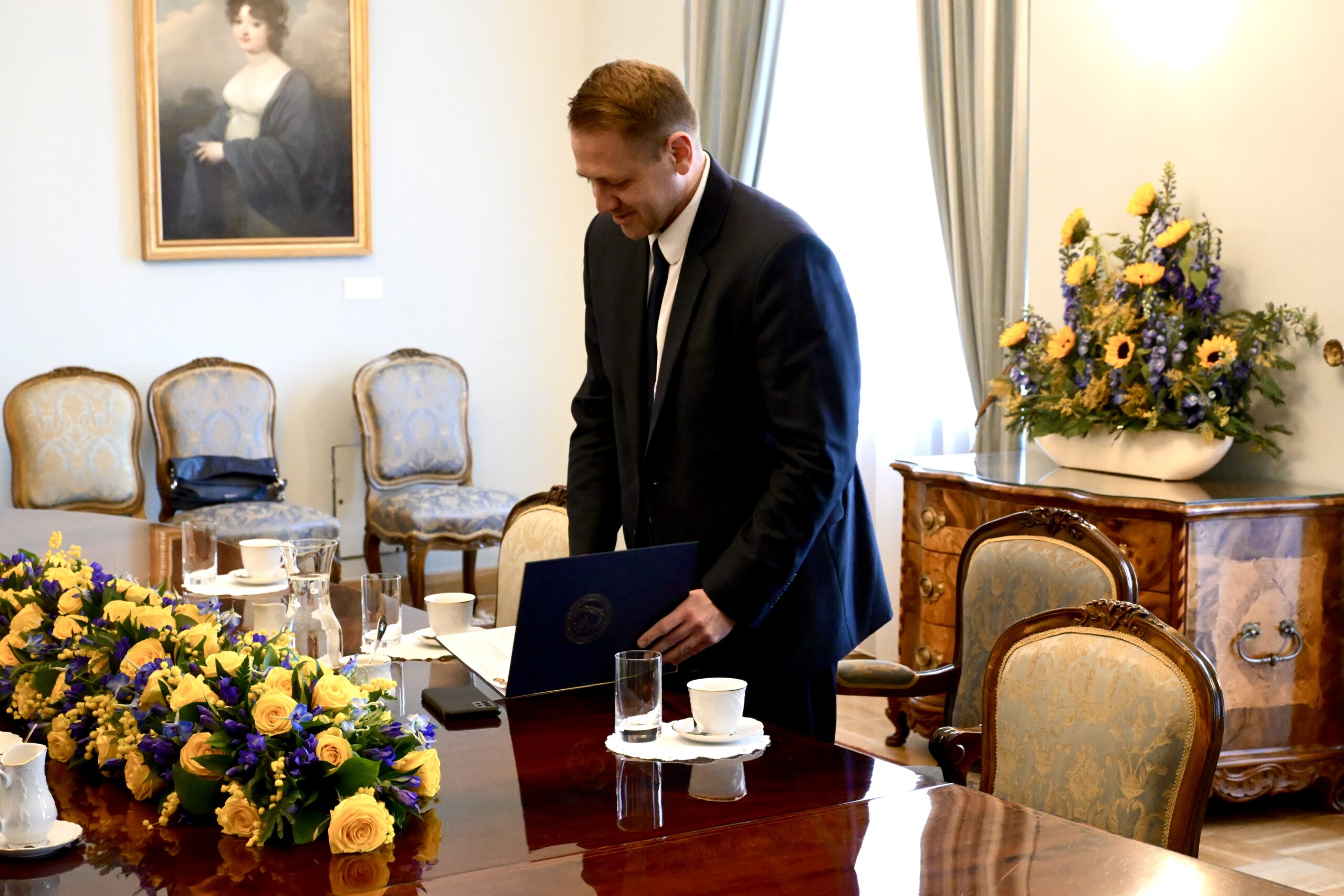
At the Presidential Palace, a meeting took place last Thursday between representatives of the Management Board of the Ordo Iuris Institute and Mateusz Kotecki, Undersecretary of State in the Chancellery of the President of the Republic of Poland. During the meeting, the president of the Ordo Iuris Institute, advocate Jerzy Kwaśniewski, and the Institute’s vice president, Marcin Perłowski, delivered nearly 40,000 signatures on a petition calling for a veto of the act bringing Poland into the EU’s Security Action for Europe (SAFE) program. The meeting took place in the same room where, on March 10, President Karol Nawrocki, Prime Minister Donald Tusk, Minister of National Defense Władysław Kosiniak-Kamysz, and President of the National Bank of Poland Adam Glapiński discussed the SAFE regulation.
More than a month ago, the Ordo Iuris Institute also provided the Chancellery of the President with expert opinions on the matter, on the basis of which the President’s advisers prepared notes for Karol Nawrocki. The petition was available at website wetodlasafe.pl.
Ordo Iuris points out that SAFE could limit state sovereignty because it ties defense funding to decisions by European Union institutions, such as the European Commission and the Council of the European Union. This means that EU institutions will have the power to exert strong influence over national security matters, which, according to the EU treaties, are competencies exclusively reserved to the Member States. The SAFE program would lead to direct EU interference in Poland’s military. Under the Constitution of the Republic of Poland, the armed forces should be subject to democratic control by bodies elected by the citizens, whereas with SAFE, decisions concerning the funding of the military would depend in part on EU institutions.
The SAFE regulation provides for a dual conditionality mechanism. The disbursement of funds takes place twice a year, following the European Commission’s approval of a Member State’s disbursement request. Additionally, the disbursement of the SAFE loan may be suspended if the Commission determines that a given country does not comply with the rule of law. This grants the Commission considerable leeway to exert political and ideological pressure on Member States, including through conditionality.
Another problem is financial risk. The program relies on long-term debt (up to 45 years), and the loan is denominated in euros, which could increase repayment costs if the zloty weakens.
According to the Ordo Iuris Institute, there is also uncertainty regarding the use of funds. And even though there is no full guarantee regarding the exact terms under which the funds may be used or whether the spending plan will be approved by EU institutions, the benefitting Member State will always be required to repay the debt. On the other hand, in accordance with Article 12 of the SAFE Regulation, the Member State using this loan contracted through the EU will submit “duly justified requests” twice a year for the disbursement of a loan tranche. The European Commission may withhold part or all of a tranche if the application is “unsatisfactory,” while the criteria for the Commission’s “satisfaction” have not been specified.
“SAFE is not just dual conditionality; it’s not just political dependence on Europe; it’s not just making our parliamentary elections next year a hostage to Ursula von der Leyen; it is also simply a hasty decision by the government that is pressing ahead with this mistake, even though a serious debate has begun about the possibility of national funding for armaments. I hope that all the analytical work and those signatures, for which we were thanked profusely at the Presidential Palace, will lead to a decision that will open the way to a healthier national discussion on funding to arm the Polish army and on Poland’s security”, Jerzy Kwaśniewski emphasizes.
On the evening of Thursday, April 12, the President of Poland, Karol Nawrocki, refused to bow to pressure from the government of Prime Minister Donald Tusk and announced that he would not sign the Polish Act on the Financial Instrument for Strengthening Security (SAFE) into law.
Read also:
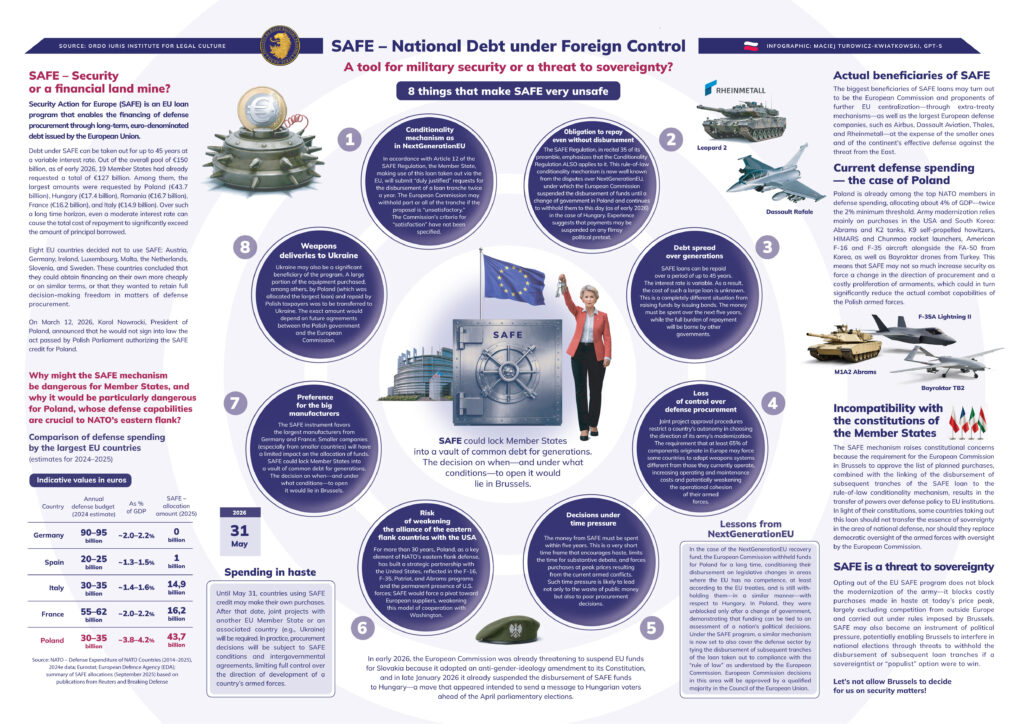
- SAFE – National Debt Under Foreign Control
- Will EU-Backed Polish PM Donald Tusk Sell Poland’s Sovereignty for a €44 Billion Loan?
- The New SAFE Mechanism to Finance Defense in the EU: Another Tool for Exerting Influence on Member States?
Photos: Ordo Iuris
